


Have you ever wondered why Ferrari doesn’t publish listicles like “The 10 Best Alternatives to Porsche for 2026?” and rank themselves as the best?
Do you think Ferrari needs to publish “10 Best Porsche Alternatives for 2026” to establish their position in the luxury sports-car conversation?
Clearly, they don’t. Why?
Because this is an “AEO hack” that prestigious brands won’t pursue.
Category winners don’t need to chase such tactics because their brand signals are strong enough to drive AI visibility.
Companies want a tactical answer to a strategic problem
If your company can’t clearly explain what it does, who it’s for, and why someone should choose it, you have bigger problems than whether or not ChatGPT mentions your brand.
I keep coming back to this in my client work.
Clients want to show up for a commercially valuable category search.
But the homepage describes the product using language nobody outside the company uses. They launch one new solution page and think it’s enough to carry the load.
Then the marketing team asks what they need to do for AEO.
There’s an endless array of random tactical things that can be done.
But the same problem keeps coming up: companies want a tactical answer to something that requires strategic work.
That’s what I mean when I say there is no AEO algorithm to hack.
I talked about this with Ethan Smith on the 5% podcast — specifically about why category alignment and a small percentage of actions will actually drive outsized returns for AEO.
In traditional SEO, we got obsessed with hacking the Google algorithm
We’d drool over every “ranking factors” study and we’d panic over every algorithm update announcement — to some extent, we still do.
To be deemed an “SEO expert” you had to demonstrate knowledge of how Google’s algorithm ranked web pages.
From there, you’d run experiments by tracking keyword position movements against page level changes to try and understand which factors are influencing Google’s algorithm.
Common types of SEO testing included:
CTR Changes / Title Testing: this worked for traditional SERPs but doesn’t apply to AEO due to the nature of “zero-click.”
Conversion Rate Testing: this worked better when SEO pages earned more traffic, but as organic traffic fades away due to zero-click, there is less opportunity to run tests against meaningful traffic.
Content Updates: you’d measure how much traffic/engagement the page earned before the content refresh versus after. AEO makes this redundant since it cuts out most of the traffic anyway.
Driving More Backlinks: A common SEO diagnosis was that competitor pages had more backlinks than you, and outranked your brand due to a backlinking deficiency. AEO kills that argument.
There is no AEO equivalent of a Google algorithm to hack
LLMs generate answer summaries based on the ingestion of training data, retrieval of web search results (grounding), and how it interprets a question’s context and wording.
This is very different than the SEO 1.0 model of updating content ➡️ tracking keyword position changes ➡️ reporting on traffic outcomes.
Rand Fishkin’s latest post on AI tracking skepticism proves this point.
The dark SEO funnel makes all of this even more complicated since top of funnel gets wiped out and branded search picks up the slack.
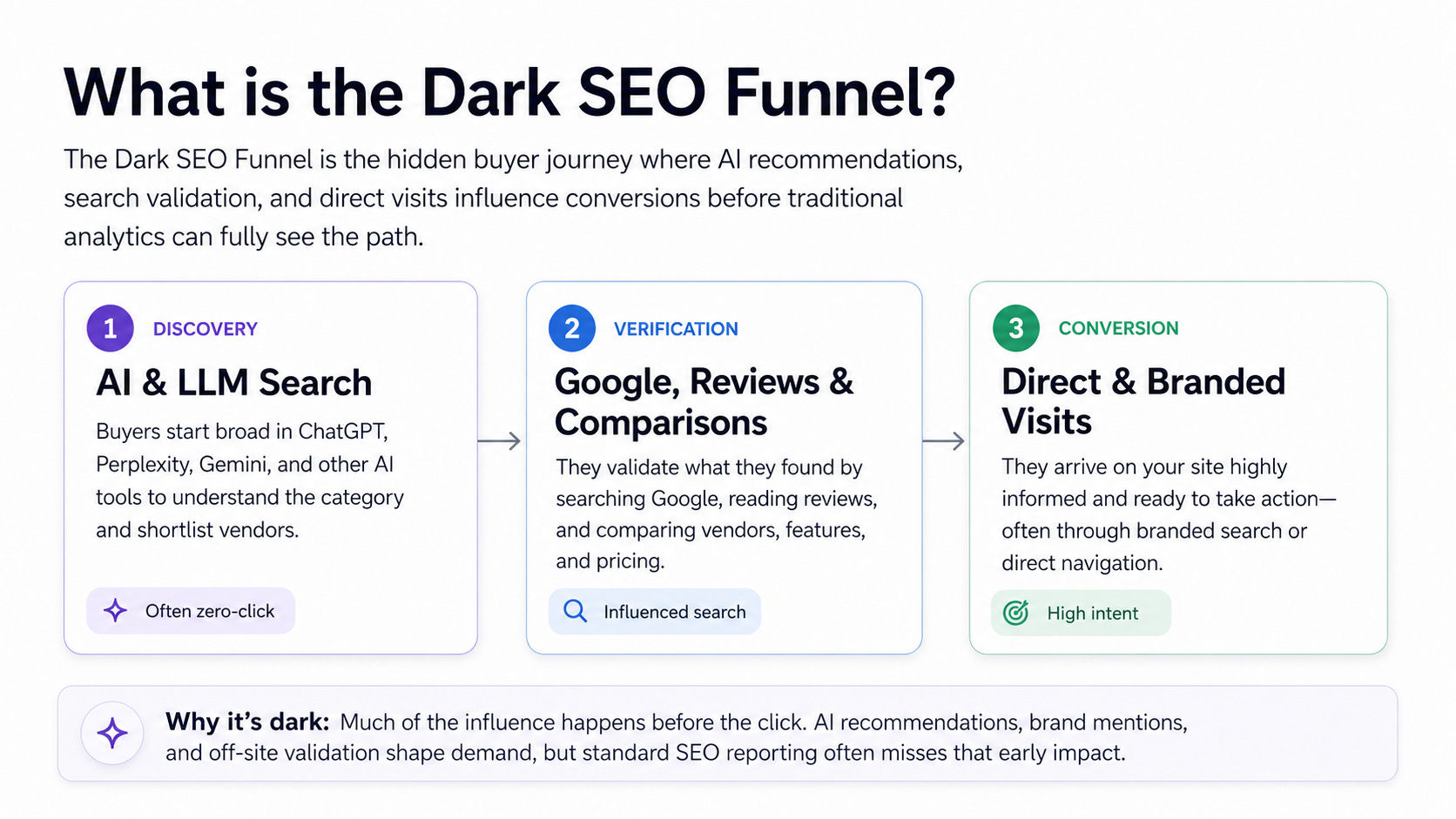
Marketers cannot bulldoze their way into AI brand mentions
Even if you rank #1 in traditional SEO for a given search, you can’t force the AI answer summary to recommend your brand.

When it comes to AI search, you have to earn it.
Lily Ray found that self-promotional listicles may not be an effective AEO tactic unless you have enough digital footprint and third-party corroboration to backup your claim of being “the best for X” thing.
LLMs already know which vendors to recommend based on category association
Answer engines create vendor shortlists based on pre-seeded / pre-determined entity knowledge. There’s no amount of GEO hacking that can change it.

Even Google’s guidance on optimizing for generative AI search says its AI search features build on its existing ranking and quality systems, but they explicitly push back on various AEO and GEO hacks.
Here’s how I’m actually approaching AEO for my clients
My work denounces most of the tactical GEO advice out there.
Instead, I start with:
Does the company’s positioning, product capabilities, and public evidence actually line up?
From there, the work crosses SEO, product marketing, sales, competitive intelligence and content.
1. Fix category misalignment
I usually start with an LLM perception audit as the foundation of where AEO gaps exist.
I’ll compare what the company wants to be known for, versus how it describes itself, versus what AI answer systems are actually saying.
From there, create a messaging misalignment matrix and start going crazy.
2. Find buyer questions the website hasn’t answered
I pull product-page query data from Google Search Console and Bing Webmaster Tools, then compare that language with the page’s messaging.
I supplement that with sales conversations, customer questions, and competitive context.
Bring those gaps to product marketing: Can the product do this? Is it a strong use case?
3. Produce content that helps buyers evaluate vendors
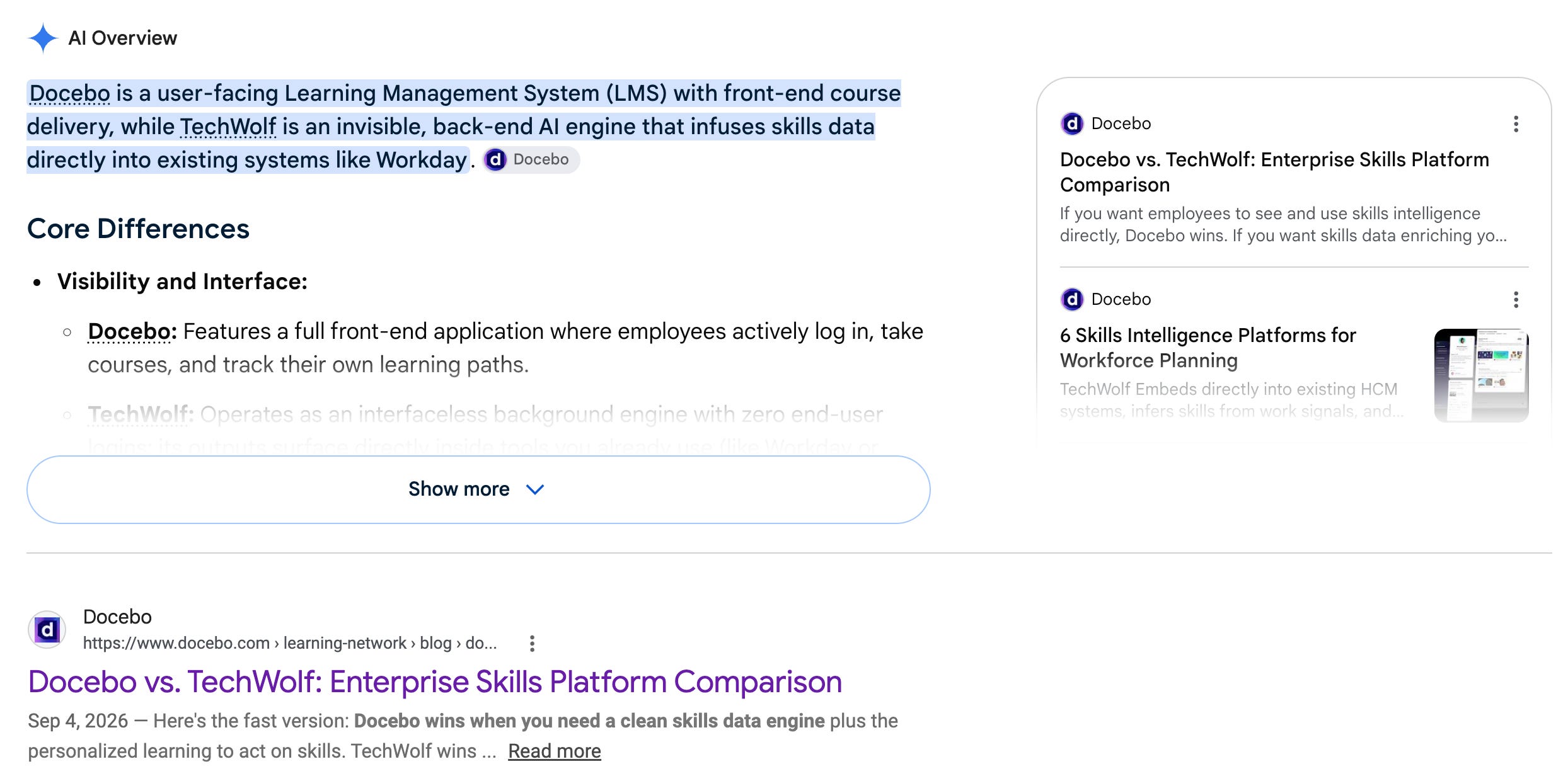
Comparison pages should explain meaningful differences and tradeoffs.
Docebo vs TechWolf is a great example:
4. Analyze the external authority gaps
I look for corroboration: customer experiences, credible industry coverage, partner explanations, and documentation that supports the company’s claims.
The big question is: “Do those sources give a qualified buyer a legitimate reason to consider us?”
I’m not interested in manufacturing Reddit conversations or buying random mentions.

5. Track commercial prompts and analyze the answers
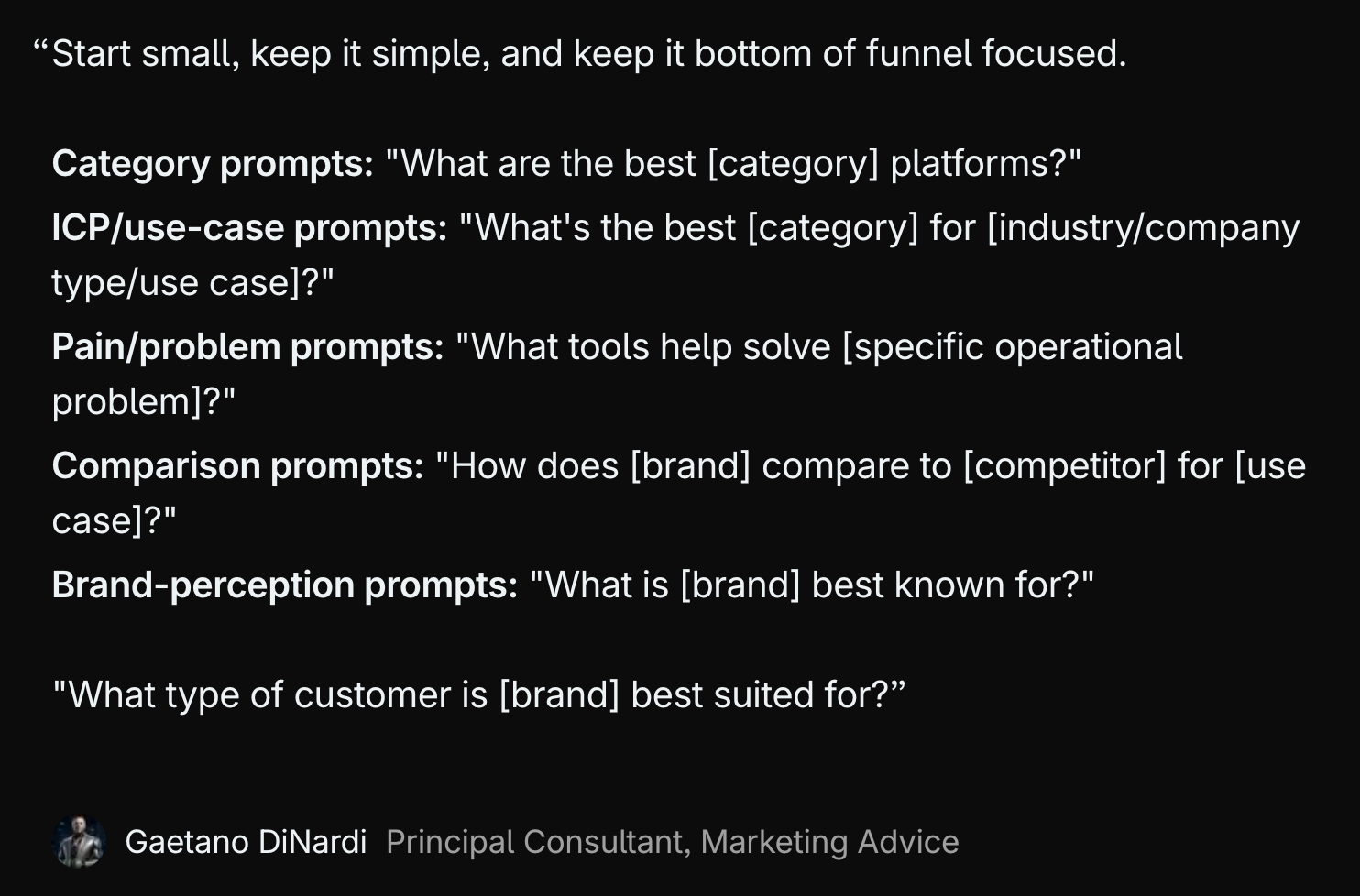
I build prompt sets around vendor selection, comparisons, alternatives, and specific buying requirements. I use search data and customer language, separate branded from non-branded questions, and remove redundant variations.
An illustrative prompt: “Which customer support platforms support ecommerce integrations and a manageable migration from Zendesk?” I’m interested in whether we belong in that evaluation—not whether we appear for every broad definition.
Check out my recommendations in Profound’s AEO guide for more 👇
6. Connect visibility to business contribution
I look for supporting movement in qualified visits, buyer conversations, account engagement, and pipeline—not just higher brand mention counts.
A buyer might discover us through AI, research us through Google, and convert later through a branded visit. I triangulate that journey rather than pretending the final click explains everything.
Thank you for reading 🙏
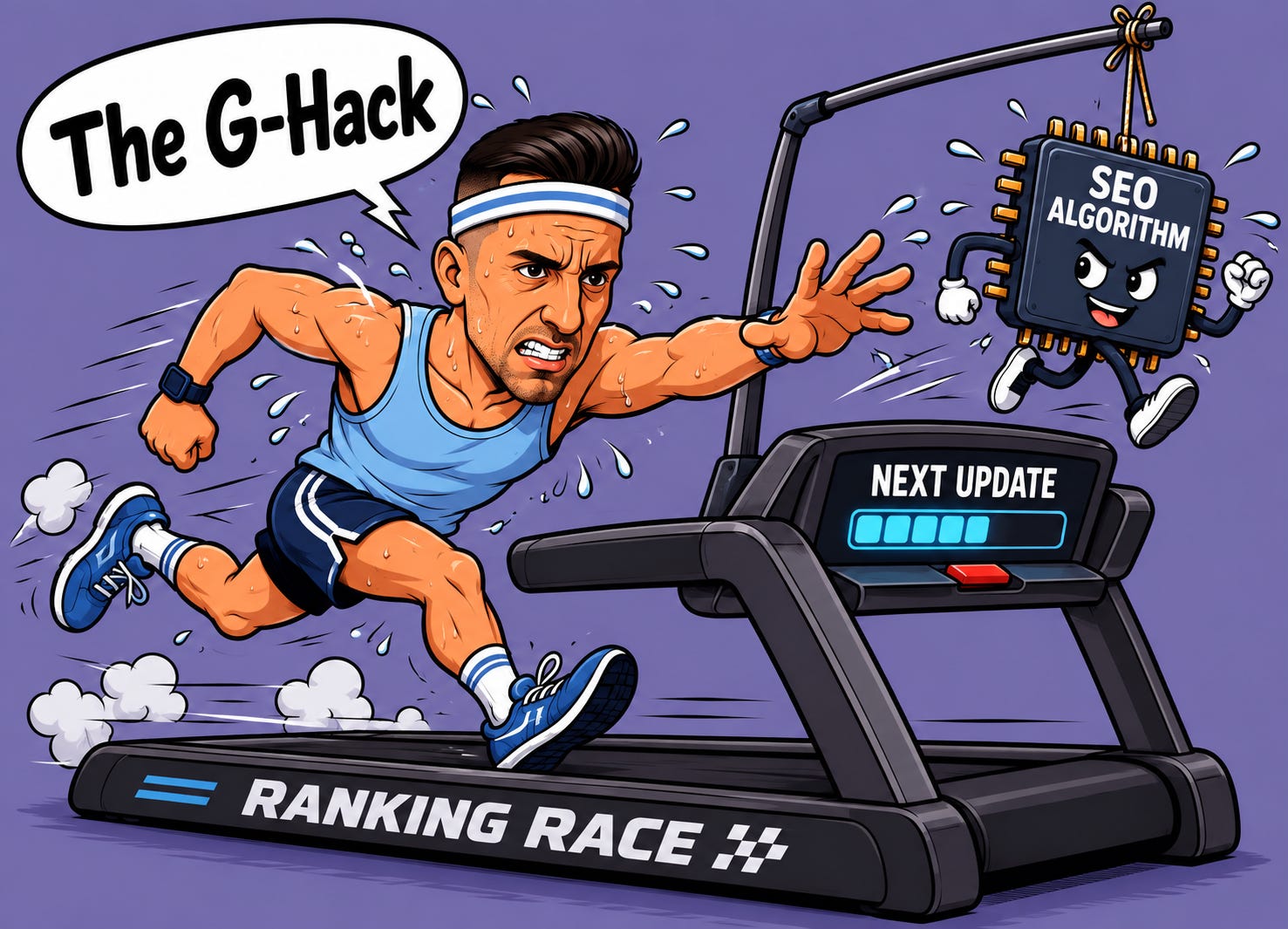
Don’t be like this guy 👇👇👇
Qualifying for a category instead of ranking for a keyword is a useful reframe. The homepage language test is a good place to start: if the words on the page do not match the words buyers use on sales calls, no amount of AEO content will fix how the model categorizes you. Pulling phrases from recorded discovery calls is often the fastest way to close that gap.